Case Study 1
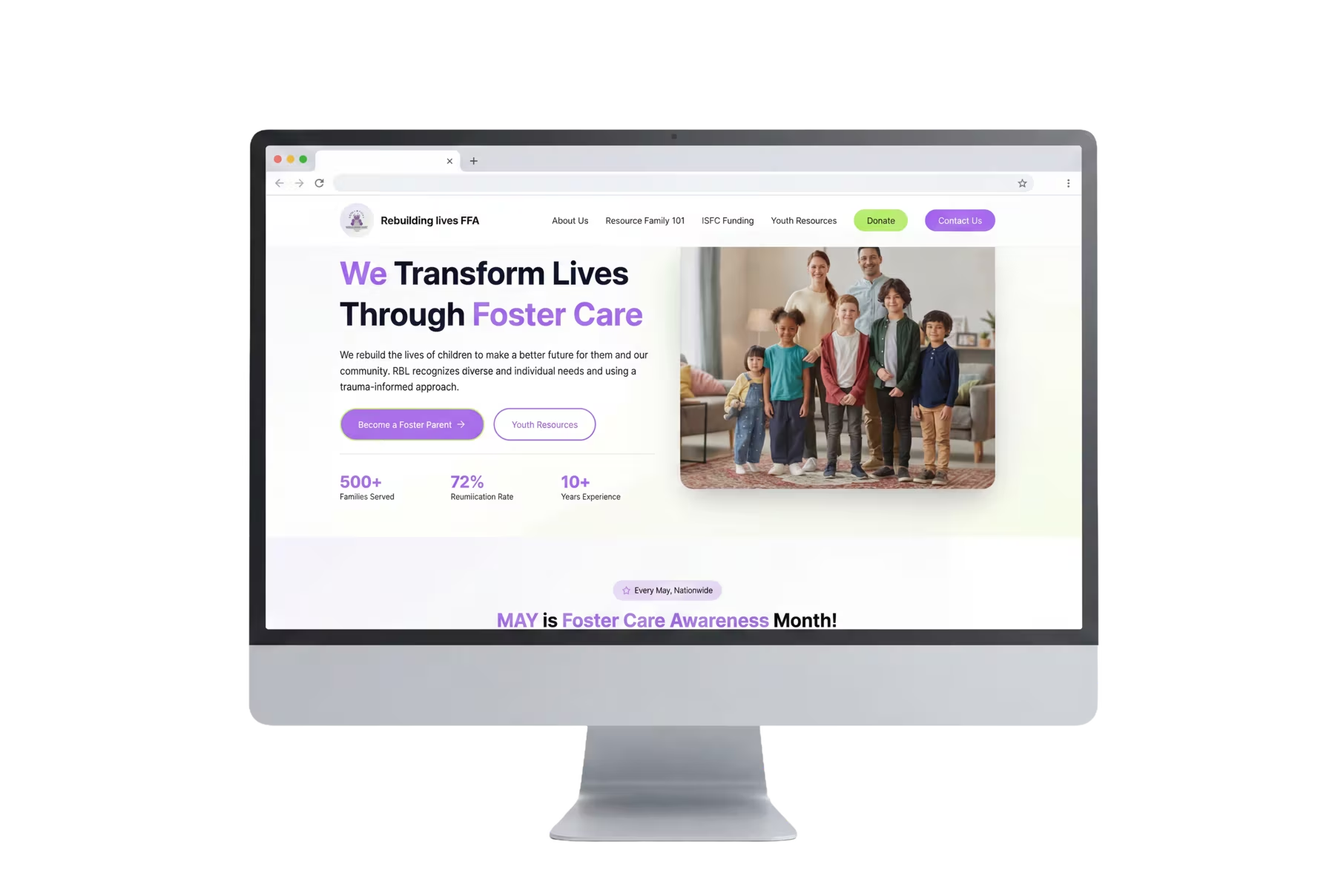
Rebuilding Lives Foster Family Agency
UX design for a Southern California non-profit dedicated to retaining resource parents and empowering foster youth through community and knowledge.
- UX Research
- Full Redesign
- Non-Profit
- Foster Care
The Problem
As a non-profit organization, the agency needs to retain resource parents, create an interactive experience rather than a job, and provide ongoing support to resource (foster) families navigating the ever-changing foster care system.
The agency earns more funding from the county when more resource homes are successful, and more youth are positively reunited with their biological families.
The Solution
Help users understand they are not alone. Post-training facts about Foster Care SOP's via Southern California, San Bernardino County law. Motivate singles, LGBTQ, and small families to adopt youth in need.
Tackle the negative stigma of foster care by incorporating the “Rebuilding” mission of RBL FFA. The company wants youth to become thriving, contributing members of society, both in placement and once they age out.
03 / Research
Usability Impact
Design focus areas
- Audience
- User Interaction
- Visual Design
- Content
- Donors
Key questions
- How will users take advantage of resources provided?
- What are steps we take to provide enough value to earn subscribers and donors?
- What does it look like for local businesses to sponsor us monthly?
- Can youth gravitate towards using our app socially?
- What does an online community of resource families look like in the future?
04 / Persona
Our Persona / Problem Statement
Shelly
“She wants to learn more than what she is being told.”
- Age
- 16
- Education
- HS
- Hometown
- Victorville, CA
- Family
- N/A
- Occupation
- N/A
Goals
Shelly needs to find out her rights, benefits, and resources that she is due during and one year after foster care.
- Find foster youth resources she can take advantage of
- Get ahead while transitioning out of foster care
After growing out of foster care, Shelly has 12 extra months to receive benefits that help her into adulthood, but she doesn't know where to start and get ahead.
Frustrations
- Resources not easily accessible or outdated
- Too many sites that don't pertain to her state/county
- Can't find impactful foster youth groups
05 / Research
Research / Pain Points
Interview
“Christina and James are second-round resource parents who must house a youth that has been in the foster care system half their life. The child will age out soon at 18. They are dedicated but having trouble on how to assist this first-time scenario by being compliant and getting the youth ready for adulthood long term.”
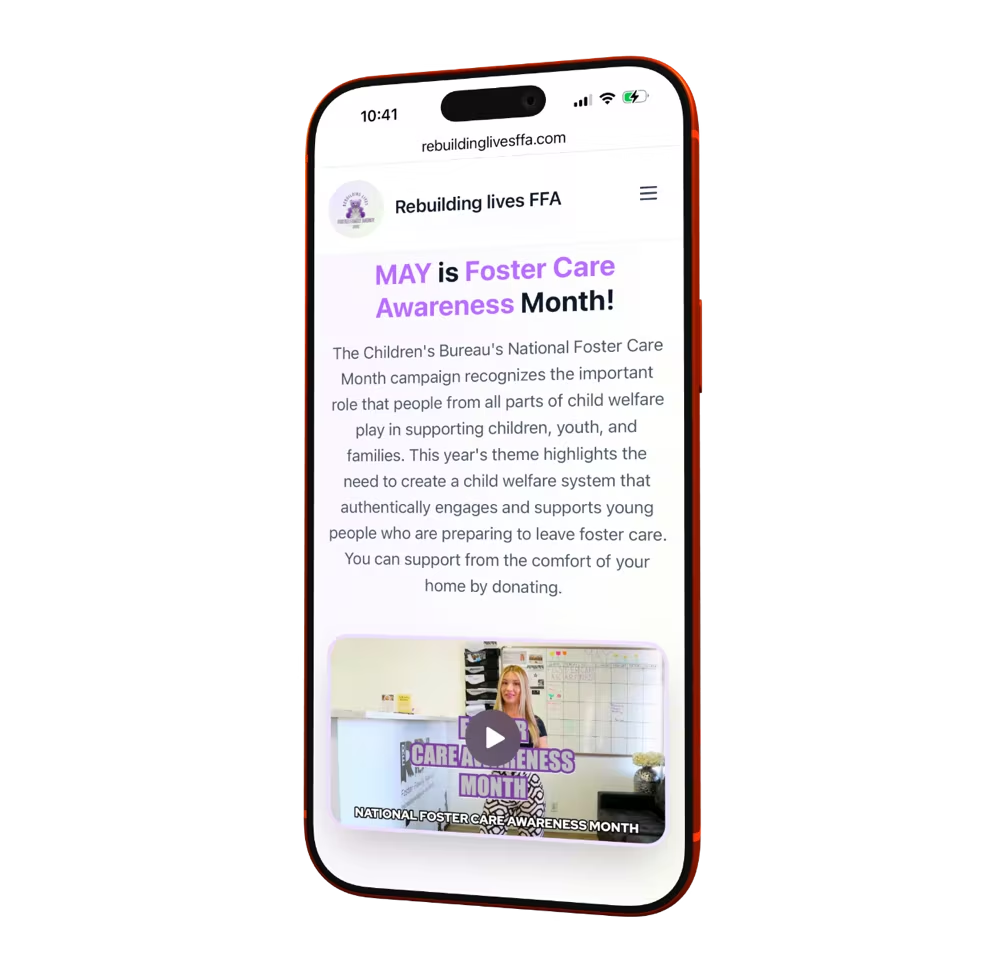
Pain points
- High risk of burnout due to stress of achieving or failing a youth.
- Training only happens once but each youth is a case-by-case scenario.
- Youth who want to educate themselves cannot or do not have resources.
- The complexity of child welfare, legal, and educational systems often leaves caregivers overwhelmed.
06 / Strategy
Solution Strategy
“Foster care is not just any job. It's a life-long career.”
My approach to this design was to emphasize the message: you are not alone. The agency is your network, and knowledge is the goal.
My constraints were set to Southern CA Foster Care Law and Bills, to not over-complicate the UI, as it would be used by kids and non-tech-savvy adults using the app.
Design principles
- Useful
- Equitable
07 / Architecture
Information Architecture
- Welcome Screen
- Homepage
- Info Video Page
- Video Selection
- Video Play Page
- Search Page
- Article Links
- Article Reads
- Profile Page
- Notifications
- Bookmarks
- Contact Info
- Help Page
- Agency Contact
- Emergency 911
- Donor Sub
Next page
UI/UX